Choose wisely from accredited and non-accredited testing is a strategic decision for any medical device manufacturer. It can make the difference between a streamlined certification process and one fraught with delays, observations from the notified body, or even having to repeat the tests entirely. In this article, we analyze what distinguishes these two types of testing, in which cases it is essential to opt for accredited testing, and how Med-Lab IBV guides manufacturers toward the most efficient regulatory compliance.
What is an accredited trial?
An accredited test is a test performed by a laboratory officially recognized under ISO/IEC 17025, which certifies its technical competence, metrological traceability and reliability of results. Accreditation implies that:
The laboratory uses validated and regularly audited procedures.
The measuring equipment is calibrated and traceable to international standards.
The technical staff is qualified and periodically evaluated.
The results issued by the laboratory are accepted by notified bodies within the CE marking process.
What is a non-accredited trial?
A non-accredited test may follow the same protocols, but is not covered by the official scope of ISO/IEC 17025 accreditation. This does not mean that it is incorrect, but rather that:
There is no external verification of technical competence.
The results may not be accepted by the Notified Body without additional justification.
Full traceability of instruments and processes is not guaranteed.
The technique may be valid, but its regulatory recognition is limited.
In many cases, non-accredited tests are used for:
Prototyping and internal validation.
Research and development.
Comparisons prior to accredited testing.
Optimization of designs prior to certification.

When does MDR 2017/745 require an accredited test?
The MDR is clear: any test that forms part of the demonstration of product conformity must be performed under a technically competent and traceable framework. This does not always strictly imply accredited testing, but:
Notified bodies prefer and prioritize accredited testing.
Safety critical tests (fatigue, strength, structural stability) should be performed with validated methods, usually within the accredited scope.
Implantable and Class III products should provide testing with greater technical assurance.
The usual practice in Europe is clear:
If the assay directly affects patient safety or determines the essential performance of the device, it must be performed accredited.
Practical examples in medical devices
- Dental implants: the fatigue test according to UNE-EN ISO 14801 is usually required and accredited.
- Bone plates: four-point bending according to ISO 9585 / ASTM F382 is a classic within the accredited scopes.
- Femoral stems: ISO 7206-4 fatigue tests are generally requested with accreditation.
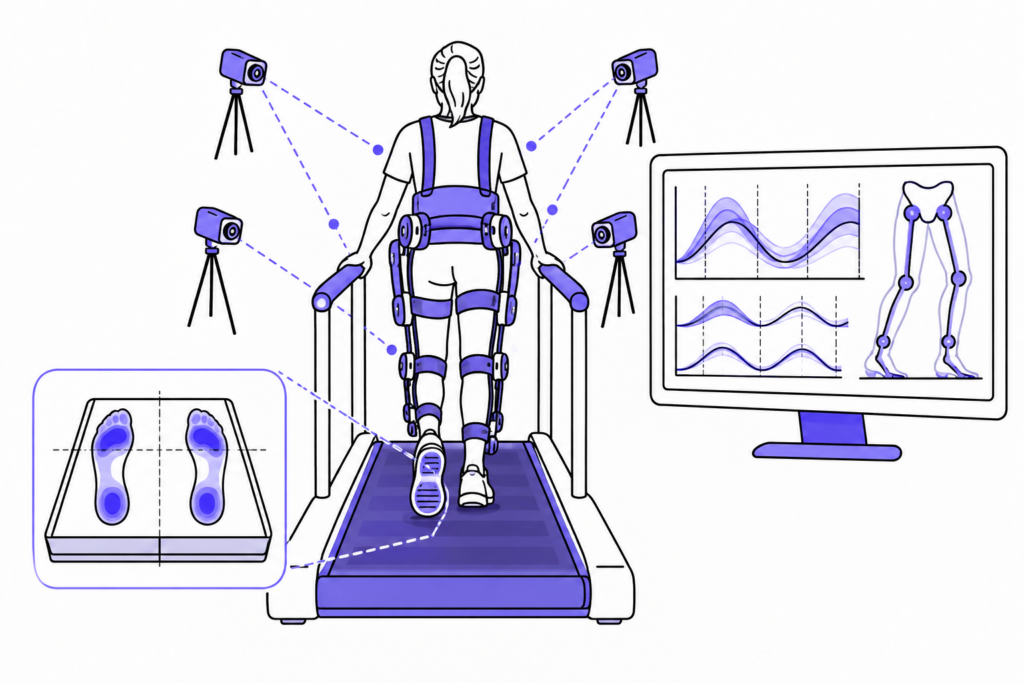
- Exoskeletons and technical aids: combine accredited tests on components and non-accredited tests for ergonomics, comfort and biomechanics.
If you want to see real examples of accredited tests, visit our accredited mechanical testing laboratory.
When is a non-accredited trial useful?
Non-accredited tests play an essential role in:
– Early design iterations.
– Weakness analysis prior to official testing.
– Comparative evaluation of materials.
– Validation of geometry alternatives.
– “Non-standard” tests where no specific ISO/ASTM exists.
At Med-Lab IBV, we usually accompany the manufacturer with a mixed cycle:
- Non-accredited assays → rapid optimization.
- Accredited assays → regulatory valid evidence.
Choosing well reduces risk
Accredited tests ensure reliability, traceability and regulatory recognition. Non-accredited tests offer flexibility and speed in design phases. The key is to combine them strategically according to product stage.
Contact Med-Lab IBV to design a test plan (accredited and non-accredited) aligned with the MDR and the technical needs of your device.