
BONE PLATE TESTS

At the Instituto de Biomecánica (IBV), we are an ENAC-accredited laboratory for mechanical strength and structural rigidity testing of bone plates and osteosynthesis systems.

Our tests ensure the safety and effectiveness of these medical devices prior to market launch, in accordance with international standards such as ISO 9585 and ASTM F382.. These studies are essential for manufacturers, laboratories, and regulatory bodies aiming to comply with the European Medical Device Regulation (MDR) 2017/745 and gain access to international markets.

ACCREDITED BONE PLATE TESTING ACCORDING TO ISO 9585 AND ASTM F382

At IBV, we conduct tests on bone plates and osteosynthesis systems to determine their ability to withstand mechanical loads under real-use conditions.

Among the main tests we carry out, the following stand out:

  • Four-point bending test: Evaluates structural stiffness and flexural strength in plates for medical devices for orthopedic, traumatology and maxillofacial surgery.
  • Determination of mechanical strength: Static and dynamic load tests to validate the durability of bone plates.
  • Regulatory compliance: We apply recognized international standards such as ISO 9585 and ASTM F382, essential for the certification of these surgical devices.

In addition to the delivery of the results report, at IBV we provide added value with technical observations and optimization strategies to improve the safety and performance of the bone plates before their release to the market.

Request information from our technical team
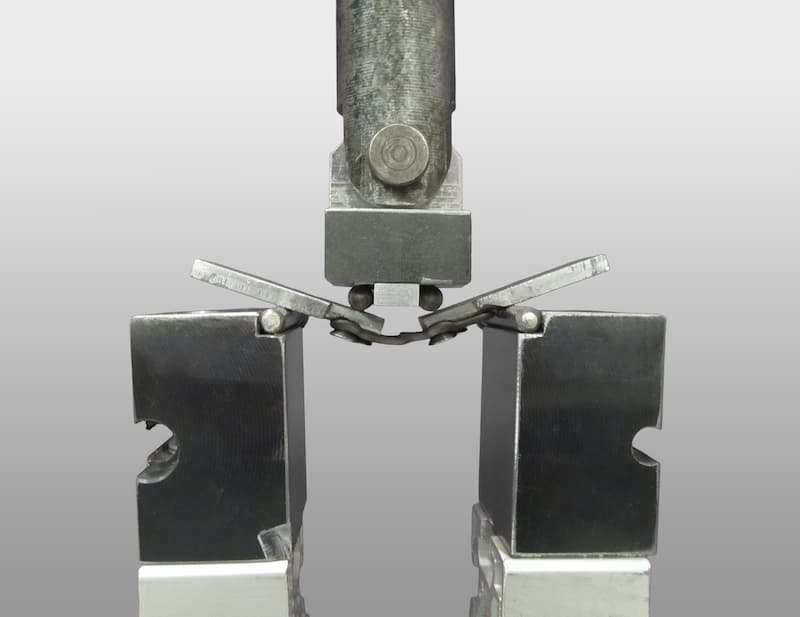
Bending Test Base Plate

LABORATORY SPECIALIZED IN BONE PLATE TESTING

The IBV biomechanics laboratory has advanced technology and specialized equipment for the evaluation of medical devices such as osteosynthesis plates for maxillofacial and orthopedic surgery and traumatology.

Osteosynthesis Plate Test

Osteosynthesis Plate Testing

● Testing of plates designed for complex bone fractures and maxillofacial surgery...
● Evaluation of mechanical interaction and structural stabilityin osteosynthesis systems...

Untitled Design (23)

Test equipment and technology

Universal testing machines for load, fatigue and mechanical strength testing.
Advanced configurations for four-point bending tests, ensuring accuracy in the measurement of structural stiffness.
High-precision instrumentation to evaluate the behavior of the devices in real conditions of use.

ISO 9585 Standard

● Testing of metallic osteosynthesis devices to validate their structural capacity.
● Application of osteosynthesis plates in bone fracture surgeries requiring stable and durable fixation.

ASTM F382 Standard

● Specific tests for osteosynthesis plates used in bone reconstruction, traumatology and maxillofacial.

STANDARDIZED TESTING IN TRAUMATOLOGY AND ORTHOPAEDIC SURGERY

IBV assays are designed to validate bone plates used in demanding surgical procedures:

These regulations ensure that the bone plates tested at IBV that have passed the validation process comply with the safety and efficacy requirements demanded by international regulatory bodies.

ADVANTAGES OF TESTING BONE PLATES IN AN ACCREDITED LABORATORY

At IBV, we not only evaluate the compliance of bone plates, but also provide a strategic approach through detailed analyses and technical recommendations to optimize product performance.

    • The only laboratory accredited by ENAC for bone plate testing 519/LE1105.
    • Compliance with international standards such as ISO 9585 and ASTM F382.
    • Traceability of measurements to national and international standards, ensuring the reliability of test results for third parties and public authorities.
    • A quality management system based on ISO 17025, under which all testing activities are conducted.
    • Essential evaluation for compliance with the European Medical Device Regulation (MDR) 2017/745, facilitating CE certification.
    • Critical validation for manufacturers seeking to introduce surgical plates into international markets.
    • Simulation of clinical scenarios, ensuring that the bone plates meet the biomechanical requirements of their surgical application.

Contact our technical team

We will help you define the necessary tests to validate the safety and efficacy of your bone plates on the market.

Frequently Asked Questions

¿Por qué es necesario realizar ensayos de resistencia y rigidez estructural en placas óseas antes de su comercialización?

ensayos de resistencia mecánica son esenciales para garantizar la seguridad, durabilidad y eficacia clínica de las placas óseas antes de su uso en cirugía ortopédica o maxilofacial. Estas pruebas reproducen las condiciones biomecánicas reales a las que se someterá el implante en el cuerpo, verificando su capacidad para resistir cargas de flexión, compresión y fatiga. Además, son obligatorios para demostrar la conformidad con el Reglamento Europeo 2017/745 (MDR), requisito previo a la obtención del marcado CE.

¿Qué evalúan las normas ISO 9585 y ASTM F382 en los ensayos de placas de osteosíntesis?

Ambas normas son las referencias internacionales para validar el comportamiento mecánico de las placas quirúrgicas: ISO 9585: define los métodos para medir la rigidez estructural y resistencia a flexión de dispositivos de osteosíntesis metálicos. ASTM F382: establece los procedimientos para evaluar la resistencia y durabilidad de placas utilizadas en traumatología, ortopedia y cirugía reconstructiva. El Instituto de Biomecánica (IBV) aplica estas normas en sus ensayos acreditados, asegurando que las placas cumplan con los estándares exigidos por organismos reguladores europeos e internacionales.

¿Cómo se realiza el ensayo de flexión a cuatro puntos en placas óseas?

El ensayo de flexión a cuatro puntos es una prueba fundamental para determinar la rigidez y resistencia estructural de una placa quirúrgica. Consiste en aplicar una carga controlada en dos puntos intermedios mientras la placa se apoya en sus extremos, simulando las tensiones reales que experimenta al fijar un hueso fracturado. Este ensayo permite identificar deformaciones, fallos o pérdidas de estabilidad en la placa, aportando información clave para el diseño y la validación del dispositivo según la ISO 9585 y la ASTM F382.

¿Qué ventajas ofrece un laboratorio acreditado por ENAC, como el IBV, para los ensayos de placas óseas?

Realizar los ensayos en un laboratorio acreditado por ENAC garantiza la validez técnica y legal de los resultados. El IBV es el único laboratorio en España acreditado para ensayos de placas óseas (519/LE1105) bajo la norma ISO 17025, lo que asegura: Trazabilidad de medidas a patrones nacionales e internacionales. Cumplimiento normativo con ISO 9585, ASTM F382 y MDR 2017/745. Simulación de condiciones clínicas reales, validando la resistencia de las placas frente a escenarios quirúrgicos exigentes. Esto permite a los fabricantes presentar datos sólidos ante autoridades competentes y organismos certificadores.

¿Cómo ayudan los ensayos biomecánicos del IBV a optimizar el diseño y el rendimiento de las placas de osteosíntesis?

El IBV no solo evalúa la conformidad del producto, sino que aporta análisis técnicos y recomendaciones estratégicas para optimizar su diseño. A partir de los resultados experimentales, sus especialistas en biomecánica ofrecen observaciones sobre comportamiento estructural, rigidez y estabilidad, ayudando a mejorar la distribución de cargas y la durabilidad del implante. Este enfoque convierte los ensayos en una herramienta de innovación y mejora continua, además de un requisito normativo, facilitando la introducción de productos más seguros y eficientes en el mercado internacional.