
SPINAL IMPLANT TESTING
The Instituto de Biomecánica (IBV) is a leading center for the evaluation and validation of spinal implants, offering specialized tests to analyze their structural strength, biomechanical behavior, and mechanical stability across different segments of the spine.
Spinal implants must withstand extreme static and dynamic loads while ensuring the stability of the operated spinal segment. At IBV, we perform customized and complementary tests to validate new design configurations, optimize materials, and improve implant biomechanics prior to certification.
In addition to delivering test results regarding implant conformity, we provide technical recommendations to enhance functionality and ensure safety within the human body.
INTERVERTEBRAL FUSION SYSTEM TESTING
Intervertebral fusion systems are designed to provide stability to damaged or degenerated spinal segments, promoting bone consolidation between adjacent vertebrae.
At IBV, we carry out specific tests to evaluate the strength and durability of these devices under various loading conditions.
- Spinal fusion system fatigue testing (ISO 12189): Evaluation of system resistance under repetitive loading scenarios.
- Structural stability and stiffness tests (ASTM F2077): Analysis of implant behavior under compression and bending loads.
- Strength testing of posterior fixation systems: Evaluation of pedicle screws and rods used in lumbar and thoracic fusion surgeries.
These tests help optimize the design of intervertebral fusion systems, ensuring their long-term stability and performance.
INTERBODY CAGE TESTING
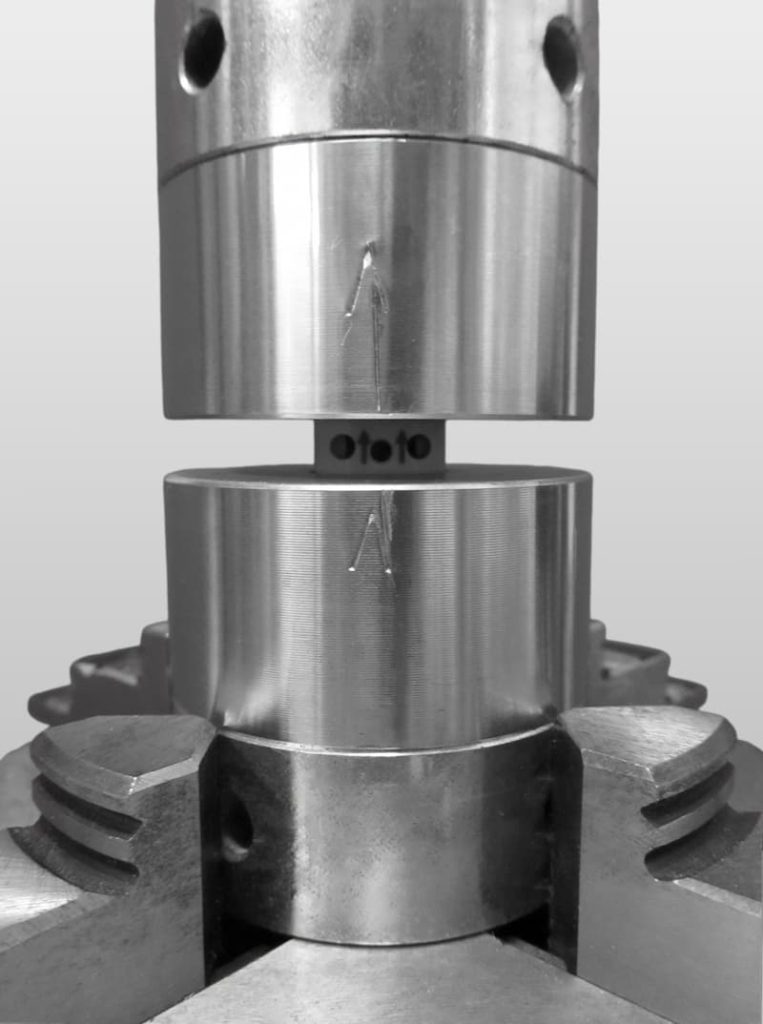
Interbody cages are devices implanted between vertebral bodies to restore disc height and promote bone fusion in spinal arthrodesis surgeries. At IBV, we perform tests to assess their mechanical strength, stability, and biological compatibility.
- Static and fatigue testing of interbody cages (ASTM F2077): Simulation of forces applied to the cage across different spinal levels.
- Wear and long-term stability assessment (ASTM F2346): Analysis of material degradation under prolonged usage conditions.
- Axial compression and bending tests: Determination of implant resistance under multidirectional loads.
These studies ensure that interbody cages meet the mechanical requirements for safe integration into the spine.
TRANSPEDICULAR FIXATION SYSTEM TESTING
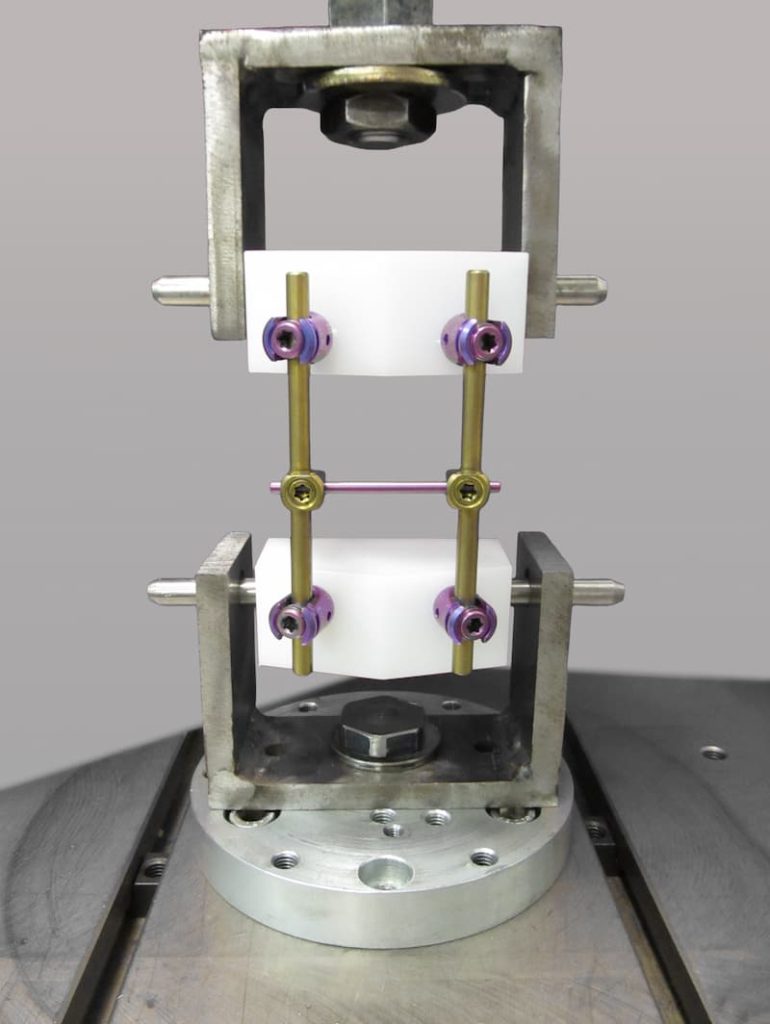
Transpedicular fixation systems consist of pedicle screws and rods used in spinal fusion surgeries to provide segmental stability. At IBV, we evaluate their structural strength and fixation capacity through specific test protocols.
- Pullout strength testing of pedicle screws (ASTM F543): Evaluation of screw anchoring capacity in different bone types.
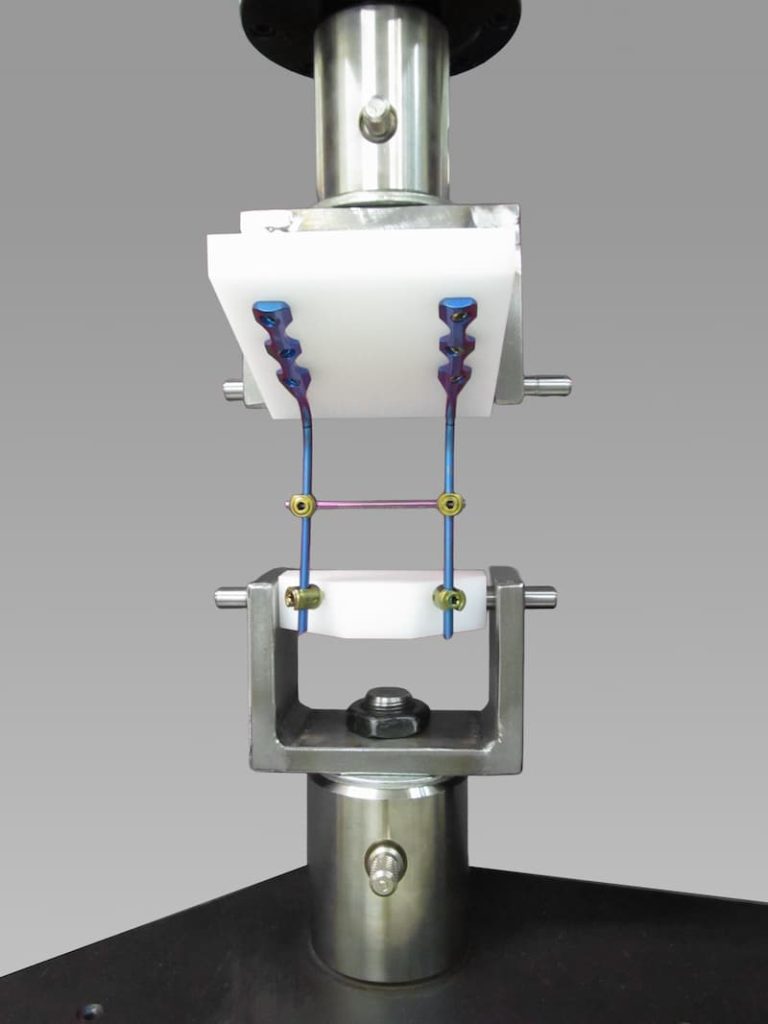
- Fatigue testing of transpedicular fixation systems (ASTM F1717): Durability analysis of components under repeated loading.
- Torsion and stability testing of screws: Measurement of screw resistance to torsional and shear forces.
These tests ensure the reliability of spinal fixation systems in vertebral stabilization procedures.
CERVICAL AND THORACIC IMPLANT TESTING
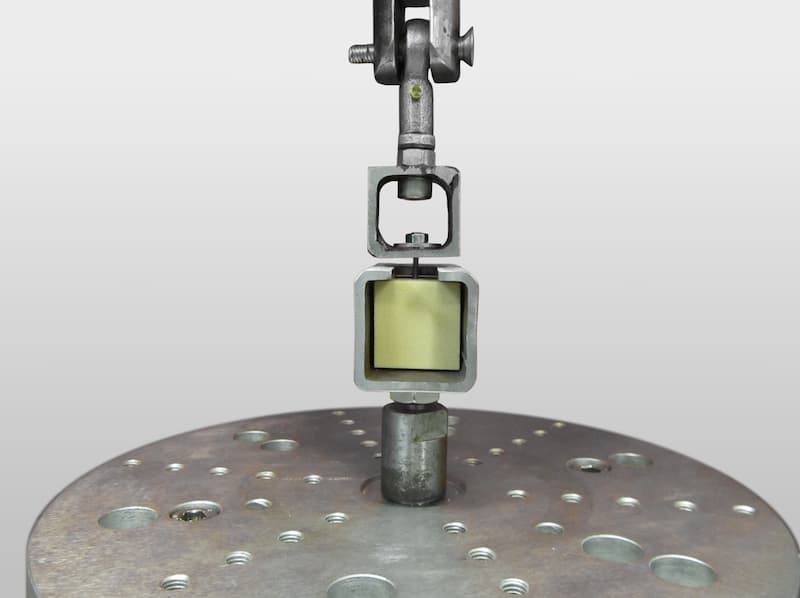
Cervical and thoracic implants are subject to different biomechanical demands than lumbar implants due to the increased mobility of these regions. At IBV, we conduct tests specifically adapted to these requirements.
- Strength testing of occipito-cervical and thoracic fixation systems (ASTM F2706): Evaluation of structural stability at the junction between the skull, cervical spine, and thoracic spine.
- Flexion and torsion testing of cervical implants: Simulation of physiological movements and assessment of resistance to multidirectional loading.
- Fatigue testing of thoracic fixation systems: Determination of durability under prolonged mechanical stress in vertebral stabilization devices.
These tests contribute to improving the design of cervical and thoracic implants to ensure their safety in fusion and stabilization surgeries.
WHY CHOOSE IBV FOR SPINAL IMPLANT TESTING
Evaluating a spinal implant is not just about meeting standards — it requires a comprehensive approach that combines mechanical, biomechanical, and clinical-environment interaction testing.
At IBV we offer:
- Mechanical testing laboratory: Load, fatigue, and structural resistance tests for spinal implants.
- Human movement laboratory: Biomechanical analysis applied to the stability and functionality of implants under simulated conditions.
- Specialized team in biomechanics and orthopedic materials.
- Manufacturer-specific methodology: Custom tests designed according to the implant’s design and materials.
- Strategic analysis: We offer technical recommendations to optimize the performance of the implant before its commercialization.
Contact our technical team
Discover how our testing services can help you evaluate the conformity of your spinal implants before certification and market launch.
