
TESTING LABORATORY FOR SUPPORT PRODUCTS AND TECHNICAL AIDS
In our testing laboratory for assistive products and technical aidsWe evaluate the safety, strength and durability of Class I sanitary devices, ensuring their compliance with current regulations. We apply rigorous testing that allows manufacturers and distributors to comply with the requirements of the European Medical Devices Regulation 2017/745 (MDR) and obtain the CE marking.

TESTING FOR SUPPORT PRODUCTS AND OTHER CLASS I PRODUCTS
Our laboratory is a benchmark in the evaluation and testing of support products and Class I medical devices, offering testing services with the utmost rigor and a track record recognized nationally and internationally. We act as strategic allies of companies, providing regulatory and specialized tests and collaborating in the documentation for CE marking.
We undergo external audits to ensure quality and transparency. In addition, our experience allows us to evaluate both classic and innovative products, developing our own procedures in the absence of specific standards.

WHAT PRODUCTS DO WE EVALUATE IN OUR LABORATORY?
We conduct trials on a wide range of Class I medical devices and assistive products, among which we highlight:
- Hospital beds and clinical furniture.
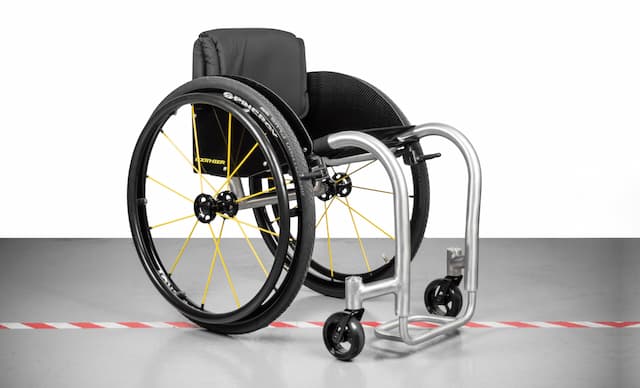
- Wheelchairs, walkers and transfer cranes.
- Cushions and positioning systems.
- Lifting and mobility assistance systems.
- Other support products for patient care and assistance.
REGULATORY COMPLIANCE FOR SUPPORT PRODUCTS
Regulation (EU) 2017/745 (MDR) establishes new requirements for Class I medical devices, obliging manufacturers to:
- Review the classification of your products, as some devices have been reclassified.
- Implement a quality management system that ensures continuous compliance with regulations.
- Prepare and maintain updated technical documentation, demonstrating product conformity.
- Establish post-marketing surveillance procedures to monitor their performance.
Our laboratory facilitates this process, helping manufacturing companies to ensure that products meet all the requirements for commercialization in the European market.
ADVANCED TECHNOLOGY FOR TESTING SUPPORT PRODUCTS
To guarantee maximum reliability in every test, we have state-of-the-art equipment:
● High-precision instrumentation, for detailed measurements of product performance and quality.
● Biomechanical simulation systems, which analyze the impact on the user and ensure user comfort and safety.

WHY CHOOSE OUR TESTING LABORATORY?
At IBV, we not only evaluate, we add value to the companies through through:
- Experience and recognition: we are a nationally and internationally recognized reference laboratory.
- Customized testingWe evaluate both standardized products and innovations without predefined standards.
- Quality assurance: We undergo external audits to ensure reliability and transparency.
- Integral supportfrom product design to final validation for commercialization.
Contact us at
and we will advise you without obligation.
If you need to guarantee the safety, efficacy and regulatory compliance of your support products, we are your best ally.
